Where did the latte macchiato come from - another espresso-based coffee drink...
If you're expecting an interesting story from the early twentieth century, you're probably going to be disappointed this time. Because the history of this coffee is somewhat shrouded in mystery. Most coffee historians are content to say that the latte macchiato first appeared in Italy in the 1880s, and it was essentially nothing more than a "reverse macchiato".
Latte macchiato - espresso on a throne of milk foam
So instead of a drink that is based on fresh espresso poured over hot milk, you have hot milk, milk foam, and only on top of that sits - truly like a throne - the prepared espresso. We'll describe the whole coronation in more detail...
How espresso becomes latte macchiato
- First of all, you need to froth your milk. Use milk with a fat content of 1% or 2%, this will ensure you have the right ratio of protein and fat to produce a good creamy froth.
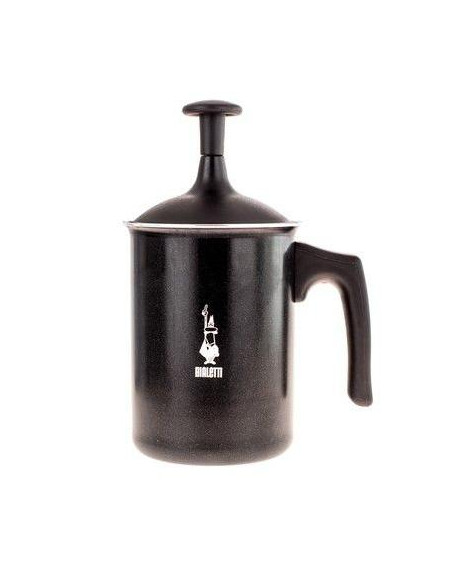
- Many espresso machines are equipped with a milk nozzle, or you can use a special frother.
- Pour the frothed milk into a special latte macchiato glass.
- Now prepare your espresso and carefully pour it on top of the milk.
The advantage of a coffee drink with such a proportion of milk is that there is no rapid increase in blood pressure due to caffeine. Moreover, milk is a source of valuable nutrients, be it protein or calcium.
Whoever cannot prepare a latte macchiato from conventional milk for some reason (for example, lactose intolerance) has the option of using Alpro's high-quality milk alternatives.
What is the difference between a latte macchiato and a cafe latte?
Many people don't differentiate these coffee drinks in any way, but when you look at the preparation process, there is one major difference. You get a latte by adding frothed milk to espresso. In the case of a latte macchiato, you add the espresso to the frothed milk.
We're usually happy when the skies are cloudless, but you're sure to find plenty of occasions to settle the espresso on a milk cloud and enjoy a latte macchiato.
Quick Overview: What is a Latte Macchiato?
- Brewing Principle: Latte Macchiato literally translates to "stained milk". Unlike standard milk-based coffee drinks, it is prepared in reverse order: warm, frothed milk is poured into a tall glass first, and after a short rest, a shot of classic espresso (approx. 30 ml) is slowly poured into the center. Due to differences in temperature and density, the coffee rests perfectly between the milk and the foam.
- Flavor Profile: This drink offers a very mild, creamy, and milky flavor. Because the espresso forms a separate layer and does not immediately mix with the entire volume, with each sip you first experience the texture of the dense foam, followed by the more intense coffee center, and finally the sweet, warm milk at the bottom.
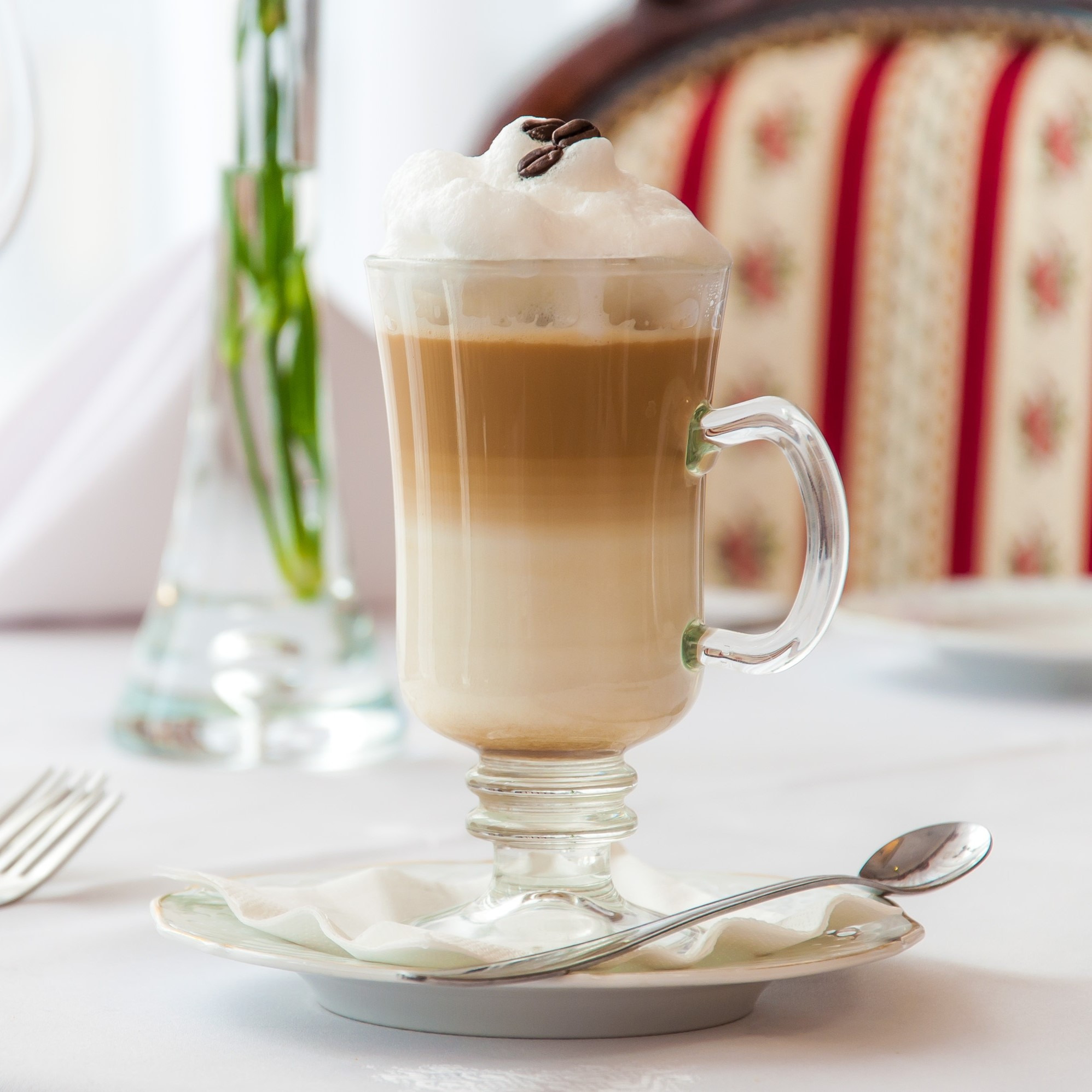
- Volume and Serving: A traditional Latte Macchiato is served in a tall, transparent glass with a volume of 250 to 300 ml to beautifully showcase the three visual layers – the bottom milk layer, the middle coffee layer, and the rich top foam with its characteristic dark coffee mark ("stain" or macchiato) in the center. It is always served with a long spoon.
How does a Latte Macchiato differ from a Caffè Latte and a classic Espresso Macchiato?
The names of Italian milk-based coffee drinks contain similar words, but the resulting beverages differ fundamentally in volume, appearance, and above all, the order in which the coffee and milk are combined.
Latte Macchiato vs. Caffè Latte: Although they share a similar volume and milk-to-coffee ratio, the difference lies in the technique. For a Caffè Latte, the barista extracts the espresso into the cup first and then pours the steamed milk over it – the drink mixes thoroughly and features only a thin layer of foam on top. For a Latte Macchiato, the coffee is poured into the milk, creating the iconic separate layers and a significantly taller, firmer foam.
Latte Macchiato vs. Espresso Macchiato: Be careful not to confuse these two, as they represent opposite extremes. While a Latte Macchiato is a large, mild, and very milky beverage (approx. 280 ml), an Espresso Macchiato is a small espresso in a mini cup (approx. 40 ml) merely "stained" with one or two spoonfuls of milk foam. If you want a lot of milk, order a Latte Macchiato. If you want strong coffee with just a touch of foam, ask for an Espresso Macchiato.
| Drink Parameter |
Latte Macchiato |
Caffè Latte |
Espresso Macchiato |
| Coffee Base |
1x classic espresso (approx. 30 ml) |
1x espresso (or double shot) |
1x classic espresso (approx. 30 ml) |
| Total Drink Volume |
250–300 ml |
250–300 ml |
approx. 40–50 ml |
| Order of Preparation |
1. Milk & foam, 2. Espresso |
1. Espresso, 2. Steamed milk |
1. Espresso, 2. Spoonful of foam |
| Visual Appearance |
3 distinct layers in a glass |
Homogeneous drink with light foam |
Small cup, coffee with a white dot |
| Flavor Intensity |
Very mild, milk sweetness dominates |
Mild, coffee flavor is dispersed |
Strong, bold, and concentrated |
Frequently Asked Questions about Latte Macchiato Preparation
1. How do you keep the layers from mixing so they stay perfectly separated?
The secret lies in **temperature differences, liquid density, and patience**. After frothing the milk into the glass, wait about 30 to 60 seconds. During this time, the liquid milk naturally separates from the lighter foam. Next, pour the freshly extracted espresso (which is hot and less dense than the milk) **very slowly and in a thin stream** into the glass, ideally right through the center or over the back of a spoon. The coffee will slide through the foam and settle precisely on top of the bottom milk layer.
2. Should a Latte Macchiato be stirred before drinking?
Visually, the drink is served unstirred to display its beautiful layers. However, from a flavor perspective, it is recommended to **gently stir the beverage with a long spoon before drinking**. If you don't stir it, you will first drink pure warm milk from the bottom, leaving you with only bitter coffee foam at the end. Stirring combines the espresso and milk, ensuring a balanced, creamy taste in every single sip.
3. What type of milk creates the best and most stable foam for this drink?
To achieve a rich and firm foam that reliably supports the coffee layer, it is best to use **chilled whole cow's milk** (around 3.5% fat content). Fat acts as a flavor carrier and adds creaminess, while a high protein content is crucial for the stability of the foam itself. If you prefer plant-based alternatives, always choose versions labeled **"Barista"** (such as oat or soy), which are formulated to foam easily and won't curdle when they come into contact with hot coffee.















































 Choose a quality